
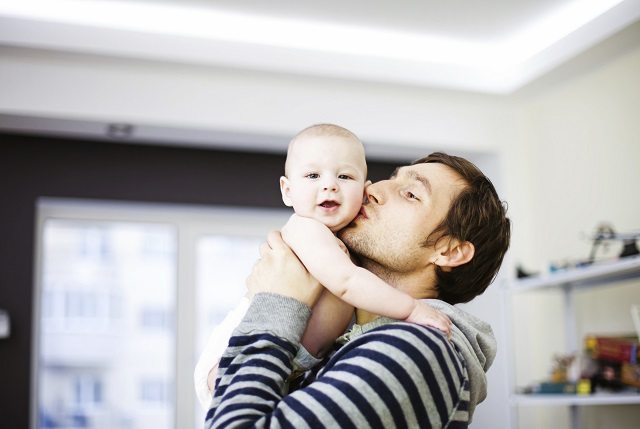
When former player and football pundit John Barnes opted to stay in studio and comment on a match rather than be at his wife’s side as she gave birth, it sparked a debate: should dad be in the delivery room? ARLENE HARRIS speaks to three fathers who’ve had different experiences in the labour ward.
There was a time when fathers-to-be paced the corridor outside the delivery room, waiting for news of their new offspring. Some new dads went even further, preferring to seek solace from other men, in the time-honoured fashion, over a pint in the pub – returning to welcome their newly swaddled infant.
Thankfully, times have changed and the majority of men would rather take an active role in the delivery of their child. most will opt for staying at their partner’s side offering moral support, while keeping well away from the source of the action. Other more enthusiastic souls have been known to prefer a bird’s eye view of the birthing process, some even recording the event for posterity and cutting the umbilical cord after birth. However, not every man has the stamina for such involvement and many new fathers actually find the process quite distressing, but due to expectations and pressures from modern society feel they have no option but to witness the whole event. James madigan has three children and was at his wife Sarah’s side throughout each of their deliveries. But the Wicklow man said he dreaded every moment of the birthing process.
“When Sarah went into labour with our first child (Adam), neither of us knew what to expect,” he recalls. “It was a very long labour and, on several occasions, the baby went into distress and emergency teams were called. I felt completely helpless throughout and could do nothing of any use to help my wife.
“I know what she was going through was huge in comparison to me but I felt so useless and the staff made me feel 34 maternity&infant like I was just in the way. So I thought that perhaps her mother or sister would have been more helpful as they had been through it before.”
His first experience of labour meant the 46-year-old endured many sleepless nights in the run-up to the births of his other two children, but at no point did he ever suggest not being there for his wife.
“I was dreading the birth of my second child but I didn’t want to say anything to Sarah as it seemed so selfish of me to be going on about being scared while she was the one who was actually delivering them,” he admits. “But in the end, I told her that I was a bit worried and said that I wished I could do something to help.”
Sarah told her husband that she completely understood if he wanted to stay away from the delivery ward and gave him the option. “I told James that he didn’t have to be there if he didn’t want to,” recalls Sarah (38). “I actually felt sorry for him during my first labour as the midwives were very dismissive of him and he was sitting by my bedside for 26 hours. “But when I told him that I genuinely didn’t mind, he said there was no way I was going through it alone.” Once his wife had given him a get-out clause the computer programmer decided to grin and bear it and be more positive about the situation.
“When Sarah told me that she understood if I didn’t want to be there, it completely focused my mind,” says James. “I realised that no matter what I felt about the situation, she needed me there for moral support and if I had opted out, I knew I would never forgive myself for missing the birth of any of my children.
“Talking about my fears and being given the choice was all I needed and I think many other fathers would like to discuss this with their partners but would be reluctant to bring it up as it is so frowned upon.
“At the end of the day, no one wants to see the person they love going through any discomfort, so I think it is an issue that every couple should cover before the birth of their child. And if it’s any comfort to dads out there, the first time is the most traumatic as you don’t know what to expect, but after that, you know what to do and just get on with it,” he adds.
Father-of-four John Hayes agrees. “How you get on in the delivery room is up to you,” says the galway man. “I knew that I wanted to see my children being born but, first time round, I wasn’t prepared for the reality of it.
“It’s emotional, scary and awe-inspiring all at the same time and although many men would rather stay away from the whole thing, I think it is really important for them to witness what their wives are going through to bring their children into the world.
“Nothing can compare to the moment when your child takes its first breath. Watching my wife do all the work was heart-breaking but it has definitely made me love and appreciate her all the more.”
However, despite the amount of times they have witnessed a delivery, for some men the experience never gets any easier. With seven children to his name, english football pundit and former player John Barnes should be no stranger to the delivery room. But when his wife Andrea went into labour last year, the 47-year-old was commentating on the Liverpool and Chelsea game and, when hearing the news that he had a new baby son, decided to stay in studio to watch the end of the match.
When asked by fellow-commentator Richard Keys if he would like to leave the studio to be with his wife and newborn, Barnes calmly replied: “I’ll stay for the second half,” and waited until the final whistle had blown before leaving the studio. This decision has caused outcry amongst parents, professionals and the media with people hotly debating whether or not fathers should be present at the birth of their child.
Consultant obstetrician and father-of-six Prof John higgins is very well placed to comment on the role of fathers in the delivery room, and says that while the majority of women would like their partner to be present, it shouldn’t be obligatory. “research has shown that the presence of a trusted companion during labour can help provide support for the mother-to-be,” he says.
“Almost 95 per cent of women will choose their partner to be present at the birth of their child, but there are couples who feel pressurised to play the expected role and either the woman or man, or even both, would feel better if someone else was there to lend support.”
In these circumstances, Prof Higgins says it would be more beneficial for all parties if an alternative companion was found for the delivery. “It has become almost compulsory for fathers to be present but if they have a fear of blood, are likely to faint or really don’t want to be there, then their presence can actually be unhelpful,” he says.
“And while attention is focused on the mother and baby, the unnoticed father may have to witness procedures which leave him entirely shell-shocked. Overall, the presence of the father at the birth of his child is a great idea and it is the choice of most couples. however, it is not obligatory and I would advise couples to have an honest discussion beforehand and make a decision that suits them both.”

